Archive

February 13, 2026

Browsing

Bahia Metals Corp. (CSE: BMT) (‘Bahia‘ or the ‘Company‘) is pleased to announce that it has successfully completed its initial public offering (the ‘IPO‘) of 11,500,000 units of the Company (the ‘Units‘) at a price of $0.50 per Unit, inclusive of the full exercise of the 15% over-allotment option. The gross proceeds from the IPO financing were $5,750,000.

The Company’s common shares will commence trading on February 12, 2026 on the Canadian Securities Exchange (‘CSE‘) under the ticker symbol ‘BMT.CN’.

Each Unit of the IPO financing consists of one common share in the authorized share structure of the Company and one-half of one common share purchase warrant. Each whole warrant entitles the holder thereof to purchase one common share in the capital of the Company at a price of $0.90 per share until February 11, 2029. The warrants are subject to an acceleration right held by the Company, such that in the event that the closing price of the Company’s shares on the CSE is $1.50 or greater per share for a total of seven trading days within a twenty consecutive day trading period, all warrants issued in connection with the IPO will expire 30 days following written notice (via news release) provided by the Company (the ‘Acceleration‘).

Pursuant to an agency agreement dated January 30, 2026, between Canaccord Genuity Corp. (the ‘Agent‘) and the Company, the Agent acted as exclusive agent for the Company in connection with the IPO. The Company paid cash commission in the amount of $347,958, issued 100,000 common shares of the Company, and granted non-transferable warrants to purchase up to an aggregate of 795,916 common shares of the Company at a price of $0.50 per share until February 11, 2029, subject to the Acceleration and a voluntary six-month hold period.

The net proceeds from the IPO will be expended on work programs at the Company’s Mangueiros Nickel Sulphide-Copper Cobalt Project located in Bahia State, Brazil and for general working capital purposes.

Mr. Goodman, CEO, states, ‘Bahia Metals has completed the requirements to secure 100% of the project that was initially owned and advanced by investors related to Appian Capital Advisory Limited. This milestone is a positive step in the company’s trajectory towards increasing shareholder value.’

The company will be attending PDAC 2026 from March 1-4 and looks forward to meeting with its supporters and the broader mining community. Please email the company to arrange a meeting.

About Bahia Metals Corp.

Bahia Metals Corp. is a mining company focused on advancing its Mangueiros Project, a Nickel Sulphide – Copper Cobalt project located in Bahia State, Brazil.

On behalf of the Board of Directors:

Stephen Goodman
Chief Executive Officer, Director
E: Investors@bahiametals.com
Follow us on LinkedIn

The Canadian Securities Exchange has not reviewed this press release and does not accept responsibility for the adequacy or accuracy of this news release.

Forward-looking Statements

This press release contains certain forward-looking statements as well as historical information. Readers should not rely on information in this summary for any purpose other than for gaining general knowledge of the Company. Forward-looking statements include, but are not limited to, the trading of the Company’s common shares on the CSE and the timing thereof and the Company attending PDAC. The words ‘expected’, ‘will’, ‘will have’, ‘will be’, ‘estimated’ and similar expressions are intended to be among the statements that identify forward-looking statements. Although the Company believes that its expectations as reflected in any forward-looking statements are reasonable, such statements involve risks and uncertainties and no assurance can be given that actual results will be consistent with these forward-looking statements. Except as required by law, the Company undertakes no obligation to update these forward-looking statements in the event that management’s beliefs, estimates, opinions or other factors should change.

The securities referenced in this news release have not been and will not be registered under the United States Securities Act of 1933, as amended (the ‘U.S. Securities Act‘), or any applicable state securities laws and may not be offered or sold in the United States or to ‘U.S. persons’ (as such term is defined in Regulation S under the U.S. Securities Act) absent such registration or an applicable exemption from such registration requirements. This news release shall not constitute an offer to sell or the solicitation of an offer to buy such securities in any jurisdiction.

Source

This post appeared first on investingnews.com

New Frontier Minerals Ltd (LSE and ASX: NFM) is pleased to announce that it has entered into a binding option and earn-in agreement providing NFM with the right to acquire a majority (90%) interest in the Pomme REE Project from Australian-listed company Metallium (ASX: MTM), which is located approximately 500 km northwest of Montréal in Québec around 100 km from the service town of Lebel-sur-Quévillon. The Pomme Project consists of 43 mineral claims, covering 2,400 ha. NFM holds the exclusive and binding option to acquire 90% of the Pomme REE-Nb project.

Highlights

  • Binding option and staged earn-in agreement executed to acquire 90% of the Pomme Project, which is a large carbonatite-hosted Rare Earth Element (REE) and Niobium (Nb) Project in Québec
  • Strategic alignment and acquisition from Metallium Limited (ASX: MTM) deepens the Harts Range vertical integration1 and adds a complementary Canadian asset to create a western world jurisdictional partnership
  • Metallium to assist as processing and technology partner, supporting metallurgical test work and downstream development
  • Initial activities will target conventional metallurgical studies work and Flash Joule Heating (FJH) test work on existing drill samples to assess the potential for upgrading REE mineralisation
  • Limited wide spaced scout drilling undertaken to date with high grade known mineralisation and large areas remaining untested from reconnaissance drilling
  • Pomme REE Carbonatite key historical intercepts2,8 include:
    • Drillhole POM-23-03: 398m @ 0.54% TREO & 0.05% Nb2O5 from 16m, including:
      • 30.5m @ 1.13% TREO & 0.03% Nb2O5 (from 311.5m) including
        • 26.5m @ 1.45% TREO & 0.02% Nb2O5
      • 51m @ 0.92% TREO & 0.06% Nb2O5 (from 216m) including
        • 9m @ 1.21% TREO & 0.03% Nb2O5 and
        • 8.5m @ 1.62% TREO & 0.03% Nb2O5
      • 36m @ 0.92% TREO & 0.06% Nb2O5 (from 174m) including
        • 18m @ 1.16% TREO & 0.03% Nb2O5
    • Drillhole POM-23-01: 513m @ 0.33% TREO & 0.08% Nb2O5 from 32m, including:
      • 17.5m @ 0.68% TREO & 0.08% Nb2O5 (from 228.6m) including
        • 7.6m @ 0.9% TREO & 0.02% Nb2O5, and
    • 94.8m @ 0.55% TREO & 0.05% Nb2O5 (from 333.5m) including
      • 4.5m @ 1% TREO & 0.02% Nb2O5, and
      • 4.9m @ 1.1% TREO & 0.02% Nb2O5, and
      • 4.25m @ 1.28% TREO & 0.02% Nb2O5, and
      • 17m @ 0.72% TREO & 0.06% Nb2O5
  • The project comprises easily accessible claims via logging roads, has access to hydro-electric power, relatively flat topography, and is supported by extensive mining infrastructure and services2
  • Low cost upfront consideration A$100,000 cash and A$200,000 in shares with contingent payments to earn a majority project interest through staged investment and technical milestones
  • Government support and existing arrangements with local Cree First Nations of Waswanipi (CFNW) community2
  • NFM (OTCQB:NFMXF) has engaged New York-based Viriathus Investor Advisory to expand its profile and actively promote the Company to US investors and capital markets

Chairman Gerrard Hall commented: ‘This transaction materially advances NFM’s critical minerals strategy. Pomme is a large, carbonatite-hosted REE system in a proven Québec district, with historical drilling having already confirmed scale and continuity. The earn-in structure provides a capital-efficient pathway for growth, while early integration of Metallium as processing and technology partner further enhances the opportunity. The Board believes Pomme’s scale, location and upside strongly position NFM to deliver meaningful shareholder value.’

John Hannaford, Chairman of Metallium, said: ‘We are delighted to partner with NFM in advancing and unlocking the full potential of the Pomme rare earths project. New Frontier brings strong exploration capability and a disciplined, value-driven approach to discovery, which we believe can materially enhance the scale and quality of the mineralised system. When combined with Metallium’s proprietary processing technologies and a comprehensive metallurgical test-work program, this partnership has the potential to support value uplift across both the resource and downstream development pathways.’

POMME CARBONATITE REE PROJECT

The Project is located approximately 500 km northwest of Montréal in Québec, around 100 km from the service town of Lebel-sur-Quévillon, approximately 50 km west of the Waswanipi Cree First Nation community, and benefits from easy access via established logging roads (Figure 1)2. The Project comprises 43 mineral claims, covering approximately 2,400 ha area and is located 7km from the world class Montviel Deposit, which has a total Indicated and Inferred resource of 266 Mt @ 1.46% TREO and 0.14% Nb2O5.

Figure 1: Regional location map showing Pomme Project, in Québec, Canada2

MTM Critical Metals (a 100% subsidiary of ASX:MTM) has completed a 13-hole diamond drilling program totalling approximately 5,718 metres at its Pomme Rare Earth Element and Niobium Project in Québec, Canada2. Carbonatite-hosted REE-Nb mineralisation was intersected in every drill hole, confirming the presence of a large, laterally extensive mineralised system exceeding 2 km² that remains open at depth (Figure 2).

The historic work program has significantly advanced the geological understanding of the complex, with early interpretations indicating that higher-grade mineralisation occurs within a ring structure surrounding a magnetic ultramafic carbonatite core.

Drill holes POM-23-03, POM 23-01 and POM 23-07 to the southwest of the mineralised carbonatite returned broad mineralised intervals with multiple high-grade TREO intersections, supporting strong geological similarities to the nearby world-class Montviel carbonatite deposit.

Importantly, large portions of this prospective ring structure remain untested due to the broad drill spacing, presenting clear potential for further discovery through follow-up drilling.

Figure 2: MTM scout drilling at the Pomme Project area overlain on airborne magnetic image (TMI, 1VD)

STRATEGY AND DEVELOPMENT OPPORTUNITY

The Pomme Project provides NFM with a highly capital-efficient, low-risk entry into a strategically located Canadian rare earth asset via a two-year option structure requiring upfront consideration of A$100,000 in cash and A$200,000 in NFM shares and minimum annual expenditure of A$100,000 per annum during the option period. This staged earn-in framework enables NFM to progressively earn a majority (90%) interest through defined technical and investment milestones, significantly limiting upfront capital exposure while preserving substantial upside.

  1. Initial work programs will focus on conventional metallurgical test work alongside the application of Metallium’s proprietary Flash Joule Heating (FJH) technology to existing drill core, targeting the production of upgraded rare earth concentrates and early validation of a scalable, low-cost processing pathway that has the potential to materially enhance project economics.
  2. The Pomme Project presents compelling exploration upside, having been subject to only limited, widely spaced drilling to date, with drill lines approximately 500 metres apart2. Despite this early-stage drill density, high-grade rare earth element intersections have already been identified within a large, laterally extensive carbonatite system, highlighting the potential for significant growth through follow-up drilling targeting near surface higher grade zones of rare earth mineralistion.

The existing results indicate that higher-grade zones of mineralisation remain open, providing New Frontier Minerals with a strong opportunity to materially expand the scale and grade of mineralisation through systematic infill and step-out drilling programs.

METALLIUM TECHNOLOGY PARTNERSHIP

The acquisition deepens the Harts Range vertical integration with MTM1, adds a highly complementary Canadian asset, and creates a compelling Western-world partnership with MTM across Australia and Canada, delivering value for shareholders.

NFM’s binding commercial framework with Metallium also establishes a strategic technology partnership that is directly applicable to the advancement of the Pomme REE-Nb Project in Québec. Under this framework, MTM’s proprietary Flash Joule Heating (FJH) technology has demonstrated encouraging sighter beneficiation results on raw rare earth ore, producing high-grade, Dy/Tb-rich concentrates without conventional flotation, acid leaching or reagent-intensive processing.

The REE concentration enhancement and impurity rejection results observed through the aforementioned FJH test work indicate potential to support alternative downstream processing pathways for carbonatite-hosted rare earth projects such as Pomme, compared to conventional techniques. Alignment with MTM provides NFM with early integration of advanced metallurgical test work, access to MTM’s Texas Technology Campus for testing, and a clear potential pathway to Western-aligned rare earth supply chains, including U.S. magnet and defence markets, reinforcing the strategic value of the Pomme Project within a vertically integrated rare earth development strategy.

NEXT STEPS

Preliminary metallurgical test work

Selection of diamond drill core for characterisation tests and accelerate metallurgical assessment on existing diamond core samples, utilising conventional metallurgical test work and tailored MTM Flash Joule Heating (FJH) processing technology to beneficiate and upgrade REE sample.

Model geology, drilling and target high-grade mineralisation

Integration of geological logging, assay results and geophysics into 3D model and identification of continuous higher grade zones for follow-up drilling.

OPTION AND EARN-IN TERMS

The Pomme Project consists of 43 mineral claims, covering 2,400 ha. New Frontier Minerals holds the exclusive and binding option to acquire 90% of the Pomme REE-Nb project from Metallium.

Key Terms Summary – Pomme Rare Earth Project Option & Earn up to 90% interest in the project tenements from Metallium Ltd (via its option to acquire 100% of Critical Element Exploration Pty Ltd, holder of the GeoMega option).

Option Terms and Earn-in Terms

Option Fee:

  • A$100,000 cash (A$50,000 already paid as an exclusivity deposit)
  • A$200,000 in NFM shares, (issued at 5-day VWAP, 6-months escrow)
  • Option Period: Commences on access to historic drill samples for 24-month duration with exclusive rights to manage exploration and technical work during the option period

Stage 1 – Option Exercise (Initial Earn-In)

Upon exercise of the option at any time during the Option Period (subject to conditions precedent), NFM must pay the following option exercise fee:

  • Cash: A$150,000
  • Equity: A$200,000 in NFM shares (20-day VWAP, 6-month escrow)Result: Entry into Joint Venture and commencement of staged earn-in
  • Minimum annual expenditure of A$100,000 per annum

Exercise of the Option is conditional upon the satisfaction (or waiver as applicable) of the following conditions precedent:

  • Due diligence: completion of financial, legal and technical due diligence on the Tenements, to the absolute satisfaction of NFM;
  • Third party approvals: the Parties obtaining all third party approvals and consents, necessary to lawfully complete the matters set out in this Agreement;
  • Deeds of assignment and assumption: MTM, NFM executing a deed of assignment and assumption in relation to all material agreements;
  • Joint Venture Agreement: the Parties entering into a definitive Joint Venture Agreement consistent with the terms and conditions set out in the binding Agreement;
  • MTM and/ or its subsidiaries being the 100% legal and beneficial owner of the Tenements; and
  • Technology Licence Agreement: MTM and NFM entering into a definitive Technology Licence Agreement consistent with the terms and conditions set out in the binding Agreement;
  • (together, the Conditions Precedent).

Stage 2 – JORC Resource Milestone (within 3 years)

  • Minimum Spend: A$2.0 million
  • Interest Earned: 80% project interest
  • Milestone Payment: A$250,000 cash and A$250,000 in NFM shares (20-day VWAP, 6-month escrow) upon earning an 80% interest

Stage 3 – Pre-Feasibility Study Milestone (within 5 years)

  • Minimum Spend: A$3.0 million
  • Interest Earned: 90% project interest
  • Milestone Payment: A$250,000 cash and A$250,000 in NFM shares (20-day VWAP, 6-month escrow) upon earning a 90% interest

Residual Interest & FJH Royalty

  • Vendor retains 10% free-carried interest to DFS
  • If diluted below 10%, interest converts to a 1.5% NSR royalty on material processed through Metallium’s FJH facility
  • Existing third-party royalties (GeoMega/Niogold) remain in place

Technology Alignment

  • Metallium retains ownership of its Flash Joule Heating (FJH) processing technology
  • Parties may enter into a separate technology licence agreement, including per-tonne fees, annual licence fees, and royalties (commercial terms to be negotiated)

About New Frontier Minerals

New Frontier Minerals Limited is an Australian-based focussed explorer, with a strategy to develop multi-commodity assets that demonstrate future potential as an economic mining operation. Through the application of disciplined and structured exploration, New Frontier has identified assets deemed core and is actively progressing these interests up the value curve. Current focus will be on advancing exploration activity at the Harts Range Niobium, Uranium and Heavy Rare Earths Project which is circa 140km north-east from Alice Springs in the Northern Territory.

Other interests include the NWQ Copper Project, situated in the copper-belt district circa 150km north of Mt Isa in Queensland.

New Frontier Minerals is listed on the LSE and ASX under the ticker ‘NFM’.

Competent Persons Statement

The scientific and technical information in this announcement, which relates to exploration results, preliminary sequential metallurgical results and the geology of the deposits described, is based on information compiled and approved for release by Mark Biggs. Mark Biggs is a Member of The Australasian Institute of Mining and Metallurgy (AusIMM Member # 107188) and meets the requirements of a Competent Person as defined by the 2012 Edition of the Australasian Code for Reporting of Exploration Results, Mineral Resources and Ore Reserves (JORC Code 2012 Edition). Mark Biggs has 35 years of experience relevant to Rare Earth Elements (REE), industrial mineral copper mineralisation types, as well as expertise in the quality and potential mining methods of the deposits under consideration. Additionally, he has 25 years of experience in the estimation, assessment, and evaluation of exploration results and mineral resource estimates, which are the activities for which he accepts responsibility. He also successfully completed an AusIMM Online Course Certificate in 2012 JORC Code Reporting. Mark Biggs is a consultant with ROM Resources and was engaged by New Frontier Minerals Limited to prepare the documentation for several prospects, specifically those within the Harts Range Prospects upon which the Report is based.

Furthermore, the full nature of the relationship between himself and New Frontier Minerals Limited has been disclosed, including any potential conflicts of interest. Mark Biggs is a director of ROM Resources, a company that is a shareholder of New Frontier Minerals Limited, and ROM Resources provides occasional geological consultancy services to New Frontier Minerals Limited. The Report or excerpts referenced in this statement have been reviewed, ensuring that they are based on and accurately reflect, in both form and context, the supporting documentation relating to exploration results and any mineral resource estimates. The release of the Report and this statement has been consented to by the Directors of New Frontier Minerals Limited. Mr Biggs consents to the inclusion in this announcement of the matters based on his information and supporting documents in the form and context in which it appears.

Forward Looking Statements

Certain information in this document refers to the intentions of New Frontier Minerals Ltd, but these are not intended to be forecasts, forward-looking statements, or statements about future matters for the purposes of the Corporations Act or any other applicable law. The occurrence of events in the future is subject to risks, uncertainties and other factors that may cause New Frontier Minerals Ltd’s actual results, performance, or achievements to differ from those referred to in this announcement. Accordingly, New Frontier Minerals Ltd, its directors, officers, employees, and agents, do not give any assurance or guarantee that the occurrence of the events referred to in this announcement will occur as contemplated. The interpretations and conclusions reached in this announcement are based on current geological theory and the best evidence available to the authors at the time of writing. It is the nature of all scientific conclusions that they are founded on an assessment of probabilities and, however high these probabilities might be, they make no claim for complete certainty. Any economic decisions that might be taken based on interpretations or conclusions contained in this announcement will therefore carry an element of risk. The announcement may contain forward-looking statements that involve several risks and uncertainties. These risks include but are not limited to, economic conditions, stock market fluctuations, commodity demand and price movements, access to infrastructure, timing of approvals, regulatory risks, operational risks, reliance on key personnel, Ore Reserve and Mineral Resource estimates, native title, foreign currency fluctuations, exploration risks, mining development, construction, and commissioning risk. These forward-looking statements are expressed in good faith and believed to have a reasonable basis. These statements reflect current expectations, intentions or strategies regarding the future and assumptions based on currently available information. Should one or more of the risks or uncertainties materialise, or should underlying assumptions prove incorrect, actual results may vary from the expectations, intentions and strategies described in this announcement. No obligation is assumed to update forward-looking statements if these beliefs, opinions, and estimates should change or to reflect other future developments.

Source

This post appeared first on investingnews.com

As organizers award the medals for the Milan Cortina 2026 Winter Olympics, fans and spectators alike may have pondered a singular question at some point: how much is an Olympic gold medal actually worth?

The short answer is far less—and far more—than most people assume.

How is an Olympic gold medal made, and what is it worth?

Despite the name, Olympic gold medals are not made of solid gold. Under International Olympic Committee rules, they are primarily composed of silver and plated with a thin layer of gold.

Still, with gold prices now hovering at historic highs, even the thin coating carries more value than it once did.

Using the official size and weight specifications for the Milan Cortina 2026 medals, precious metals firm Dillon Gage calculated what a gold medal would be worth if it were cast entirely in solid gold.

Each Milan Cortina medal measures 80 millimeters in diameter and 10 millimeters thick. Based on those dimensions, Dillon Gage estimates a medal of that size would have a volume of approximately 47.6 cubic centimeters and would contain about 919 grams of gold if produced entirely from the metal.

At the current spot gold price of US$5,061.45 per troy ounce, that equates to roughly US$149,600 in intrinsic metal value alone, all before factoring in craftsmanship or symbolism.

But this is a hypothetical scenario. The actual gold medal that will hang around an athlete’s neck in Italy will contain 500 grams of .999 fine silver and just 6 grams of .9999 gold plating.

Using current spot prices of gold at US$5,061.45 per troy ounce and silver at US$87.00 per troy ounce, the combined intrinsic metal value of a 2026 Olympic gold medal comes to approximately US$2,375.

A silver medal, made of 500 grams of .999 silver, carries a metal value of about US$1,402 at today’s prices.

A bronze medal, composed of 420 grams of copper priced at roughly US$5.90 per pound, has a melt value of about US$5.46.

“The value of gold medals is a curious inquiry we receive, especially around the time of the Olympics,” said Terry Hanlon, president of Dillon Gage Metals. “It’s one of the most recognizable medals in the world, so it’s natural for people to wonder what it’s made of and what it’s actually worth. While Olympic gold medals are not solid gold, the silver content alone carries far more value today than it did just a few years ago, reflecting how much precious-metal markets have changed.”

The medals themselves were designed by a multidisciplinary team led by Raffaella Paniè and produced by the Italian State Mint and Polygraphic Institute (IPZS). Their split-surface design symbolizes the union of Milan and Cortina, as well as the shared effort behind every Olympic achievement.

Precious metals on the rise

Still, as eye-catching as the design may be, the math behind the medals offers a telling snapshot of today’s precious metals market.

When the Paris 2024 Olympic medals were unveiled two years ago, gold was trading around US$2,400 per troy ounce. At that time, the intrinsic metal value of a gold medal was under US$1,000.

Today, gold prices have more than doubled. The theoretical value of a solid-gold Milan Cortina medal now approaches US$150,000, and even the thin six-gram plating layer carries over US$975 in gold value alone.

The surge reflects broader trends in global markets where gold has rallied amid inflation concerns, geopolitical tensions, and rising investor demand for safe-haven assets.

Silver has also strengthened, contributing significantly to the base value of Olympic medals that are largely silver by weight.

But what is it really worth?

Yet despite the fun computation experiment, their actual worth undeniably lies elsewhere: the years of training, the sacrifices, the split-second finishes, and the history attached to standing atop a podium as the world watches.

By the time the flame is lit in Milan and Cortina, more than 5,000 athletes will compete for a place in Olympic history.

While its actual value will technically be worth a few thousand dollars in weight, for the world-class athletes showcasing their prowess, each medal is priceless in their own right.

No matter how high gold prices climb, the opportunity to win on the Olympic stage remains beyond calculation.

Securities Disclosure: I, Giann Liguid, hold no direct investment interest in any company mentioned in this article.

This post appeared first on investingnews.com
Latvian startup Deep Space Energy announced it has raised approximately US$1.1 million in a combination of private investment and public funding to advance a radioisotope-based power generator designed to operate on the Moon.

The company closed a US$416,500 pre-seed round led by Outlast Fund and angel investor Linas Sargautis, a former co-founder of NanoAvionics. It also secured an additional US$690,200 in public contracts and grants from the European Space Agency (ESA), NATO’s Defense Innovation Accelerator for the North Atlantic (DIANA), and the Latvian government.

Deep Space Energy is building a compact power system that uses radioisotopes, which are materials derived from nuclear waste that generate heat through natural decay, to produce electricity.

Founder and CEO Mihails Ščepanskis said the system converts that heat into electrical power while using significantly less fuel than conventional radioisotope thermoelectric generators (RTGs) currently deployed in space.

“Our technology, which has already been validated in the laboratory, has several applications across the defense and space sectors.

“First, we’re developing an auxiliary energy source to enhance the resilience of strategic satellites. It provides the redundancy of satellite power systems by supplying backup power that does not depend on solar energy, making it crucial for high-value military reconnaissance assets,” Ščepanskis said.

The company emphasized that the generator is not designed for weapons applications. Instead, it is targeting dual-use satellites operating in Medium Earth Orbit (MEO), Geostationary Orbit (GEO) and Highly Elliptical Orbit (HEO), all of which focus on communications, early warning systems, and reconnaissance capabilities.

These satellites support defense functions including synthetic aperture radar for detecting troop movements, signal intelligence systems, and missile-launch detection platforms.

According to Ščepanskis, recent geopolitical events have underscored their importance.

The war in Ukraine demonstrated the decisive role of satellite-based reconnaissance data. In 2025, Ukraine lost its beachhead in Russia’s Kursk Oblast during a period when the US temporarily halted the sharing of satellite intelligence.

“As Europe is trying to become more independent, it is imperative to produce satellites with advanced capabilities on our own. Our technology provides an auxiliary energy source for satellites, which makes them more resilient to non-kinetic attacks and malfunctions,” he added.

Beyond defense, Deep Space Energy is positioning its technology for lunar exploration. The company says its generator could support upcoming programmes such as NASA and ESA’s Artemis and Argonaut initiatives, as well as future lunar rover missions and the Moon Village framework.

On the Moon, temperatures can fall below minus 150 degrees Celsius during night cycles that last roughly 354 hours, making solar power unreliable.

Deep Space Energy estimates that about two kilograms of Americium-241 could generate 50 watts of power for a rover, compared with around 10 kilograms required by legacy RTG systems for similar output.

By reducing fuel requirements, the company argues it could extend rover lifetimes across multiple lunar day-night cycles, potentially lasting years.

Securities Disclosure: I, Giann Liguid, hold no direct investment interest in any company mentioned in this article.

This post appeared first on investingnews.com
Copper Quest Exploration Inc. (CSE: CQX,OTC:IMIMF; OTCQB: IMIMF; FRA: 3MX) (‘Copper Quest’ or the ‘Company’) announces that it has entered into a securities for debt settlement agreement dated February 11, 2026 (the ‘Agreement’) with a professional advisor of the Company.

Pursuant to the Agreement, the Company has agreed to settle debt in the amount of $113,405.28 through the issuance of 872,348 units (each, a ‘Unit‘) at a deemed price of $0.13 per Unit, whereby each Unit shall be comprised of one (1) common share in the capital of the Company (each a ‘Share‘) and one (1) Share purchase warrant (each whole, being a ‘Warrant‘). Each Warrant will be convertible into an additional Share (a ‘Warrant Share‘) at an exercise price of $0.165 per Warrant Share and will expire on the date that is two (2) years following the date of issuance (the ‘Expiry Date‘). The Expiry Date shall be subject to acceleration should the closing price of the Shares on the Canadian Securities Exchange (or any such other stock exchange in Canada as the Shares may trade at the applicable time) equal or exceed $0.50 for ten (10) consecutive trading days at any time from the date which is 4 months following their date of issue, the Company may accelerate the expiry date of the Warrants such that the Warrants shall expire on the date which is 30 calendar days following the date a news release is issued by the Company announcing the accelerated expiry date of the Warrants.

The Agreement and the issuance of the securities thereunder are subject to the approval of the CSE. The securities will be subject to a hold period of four months and one day pursuant to CSE policies and applicable securities laws.

About Copper Quest

The company’s land holdings comprise 7 projects that span over 45,000 hectares in great mining jurisdictions of Canada and the USA. Copper Quest is committed to building shareholder value through acquisitions, discovery-driven exploration, and responsible development of its North American critical mineral portfolio of assets. The Company’s common shares are principally listed on the Canadian Stock Exchange under the symbol ‘CQX’. For more information on Copper Quest, please visit the Company’s website at www.copper.quest.

Copper Quest has a 100% interest in the past-producing Alpine Gold Mine located approximately 20 kilometers northeast of the City of Nelson British Columbia, spanning 4,611.49 hectares with a 2018 National Instrument 43-101 Standards of Disclosure for Mineral Projects historical inferred resource of 268,000 tonnes, estimated using a cut-off grade of 5.0 g/t Au and an average grade of 16.52 g/t Au, that represents an inferred resource of 142,000 oz of gold (McCuaig & Giroux, 2018)*. Apart from the Alpine Mine itself the property hosts 4 other less explored significant vein systems including the past-producing King Solomon vein workings, the Black Prince and the Cold Blow veins system, and the Gold Crown vein system. *The Company has not yet completed sufficient work to verify the 2018 historic inferred resource results.

Copper Quest has a 100% interest in the road accessible Stars Porphyry Copper-Molybdenum Property, spanning 9,693 hectares in central British Columbia’s Bulkley Porphyry Belt with Tana Zone discovery drill intersection highlights of 0.466% Cu over 195.07m* in drill hole DD18SS004 from 23.47m, 0.200% Cu over 396.67m* in drill hole DD18SS010 from 29.37m, and 0.205% Cu over 207.27m* in drill hole DD18SS015 from 163.98m. This highly prospective, approximately 5 X 2.5 kilometer annular magnetic anomaly is interpreted to represent an altered monzonite intrusion and surrounding hornfels.

Copper Quest has a 100% interest in the road accessible Kitimat Copper-Gold Property, spanning 2,954 hectares within the Skeena Mining Division of northwestern British Columbia located northwest of the deep-water port community of Kitimat, British Columbia. The property benefits from exceptional infrastructure, being within 10 km of tidewater, 1.5 km of rail, and 6 km of high-voltage hydroelectric transmission lines. Exploration on the Kitimat property dates to the late 1960s, with the most significant historical work conducted by Decade Resources Ltd. (2010), which completed 16 diamond drill holes totaling 4,437.5 meters in the Jeannette Cu-Au Zone, and drill intersection highlights of 1.03 g/t Au, 0.54% Cu over 117.07 m in Hole J-7 from 1.52 m, 1.00 g/t Au, 0.55% Cu over 103.65m in Hole J-1 from 9.15 m, 0.80 g/t Au, 0.45% Cu over 107.01m in Hole J-2 from 6.10 m, and 0.41 g/t Au, 0.33% Cu over 112.20m in Hole J-8 from 11.89 m.

Copper Quest has a 100% interest in the Nekash Copper-Gold Project, a porphyry exploration opportunity located in Lemhi County, Idaho, USA, along the prolific Idaho-Montana porphyry copper belt that hosts world-class systems such as Butte and CUMO. The project is fully road-accessible via maintained U.S. highways and forest service roads and consists of 70 unpatented federal lode claims covering 585 hectares.

Copper Quest has a 100% interest in the road accessible Stellar Property, spanning 5,389-hectares in British Columbia’s Bulkley Porphyry Belt contiguous to the Stars Property.

Copper Quest has a 100% interest in the Thane Project located in the Quesnel Terrane of Northern British Columbia spanning over 20,658 hectares with 10 priority targets identified demonstrating significant copper and precious metal mineralization potential.

Copper Quest has an earn-in option of up to 80% and joint-venture agreement on the road accessible Rip Porphyry Copper-Molybdenum Project, spanning 4,700-hectares located in the Bulkley Porphyry Belt in central British Columbia.

On behalf of the Board of Copper Quest Exploration Inc.

Brian Thurston, P.Geo.
Chief Executive Officer and Director
Tel: 778-949-1829

For further information contact:
Investor Relations
info@copper.quest

https://x.com/CSECQX
https://ca.linkedin.com/company/copper-quest

Forward Looking Information

This news release contains certain ‘forward-looking information’ and ‘forward-looking statements’ (collectively, ‘forward-looking statements‘) within the meaning of applicable securities legislation. All statements, other than statements of historical fact included herein, including without limitation, future operations and activities of Copper Quest, are forward-looking statements. Forward-looking statements are frequently, but not always, identified by words such as ‘expects’, ‘anticipates’, ‘believes’, ‘intends’, ‘estimates’, ‘potential’, ‘possible’, and similar expressions, or statements that events, conditions, or results ‘will’, ‘may’, ‘could’, or ‘should’ occur or be achieved. Forward-looking statements reflect the beliefs, opinions and projections on the date the statements are made and are based upon a number of assumptions and estimates based on or related to many of these factors. Such factors include, without limitation, risks associated with possible accidents and other risks associated with mineral exploration operations, the risk that the Company will encounter unanticipated geological factors, risks associated with the interpretation of exploration results, the possibility that the Company may not be able to secure permitting and other governmental clearances necessary to carry out the Company’s exploration plans, the risk that the Company will not be able to raise sufficient funds to carry out its business plans, and the risk of political uncertainties and regulatory or legal changes that might interfere with the Company’s business and prospects. Readers should not place undue reliance on the forward-looking statements and information contained in this news release concerning these items. The Company does not assume any obligation to update the forward-looking statements of beliefs, opinions, projections, or other factors, should they change, except as required by applicable securities laws.

The Canadian Securities Exchange has not reviewed, approved or disapproved the contents of this press release, and does not accept responsibility for the adequacy or accuracy of this release.

News Provided by GlobeNewswire via QuoteMedia

This post appeared first on investingnews.com

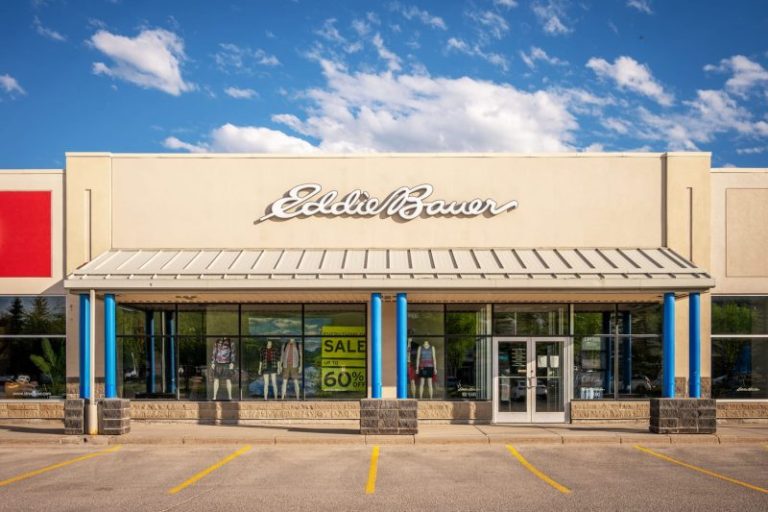
The operator of roughly 180 Eddie Bauer stores across the U.S. and Canada has filed for Chapter 11 bankruptcy protection, blaming declining sales and a litany of other industry headwinds.

The bankruptcy filing marks the third time in a little over two decades for the storied-but-now-tired brand that began as a Seattle fishing shop, later outfitted the first American to climb Mount Everest and made thousands of newfangled down jackets and sleeping bags for the military during World War II.

Eddie Bauer LLC said Monday it had entered into a restructuring pact with its secured lenders as it made the filing in the U.S. Bankruptcy Court for the District of New Jersey.

Most Eddie Bauer retail and outlet stores in the U.S. and Canada will remain open as the company winds down certain locations. It noted that it will conduct a court-supervised sales process, and if a sale can’t be executed, it will begin a wind-down of its U.S. and Canadian operations.

“This is not an easy decision,” said Marc Rosen, CEO of Catalyst Brands, which maintains the license to operate Eddie Bauer stores in the U.S. and Canada. “However, this restructuring is the best way to optimize value for the retail company’s stakeholders and also ensure Catalyst Brands remains profitable and with strong liquidity and cash flow.”

Eddie Bauer’s stores outside of the U.S. and Canada are operated by other licensees, are not included in the Chapter 11 filings, and will stay open, according to the release.

Authentic Brands Group continues to own the intellectual property associated with the Eddie Bauer brand and may license the brand to other operators, the company said. The operations of other brands in the Catalyst Brands portfolio are not affected by this filing and will continue in the normal course, according to the company.

Eddie Bauer’s e-commerce and wholesale operations will also not be impacted by the wind down, as they are operated by a company called Outdoor 5, LLC. That was a transition it made in January and became effective Feb. 2.

Eddie Bauer joins a growing list of U.S. retailers this year that are closing stores, as companies reorganize under bankruptcy protection or pare down their operations to focus on the most profitable businesses.

The parent company of Saks Fifth Avenue said last month that it was seeking bankruptcy protection, buffeted by rising competition and the massive debt it took on to buy its rival in the luxury sector, Neiman Marcus, just over a year ago. A few days later, the parent company said it was closing most of its Saks Off 5th stores.

Amazon said earlier this month that it was closing almost all of its Amazon Go and Amazon Fresh locations within days as it narrows its focus on food delivery and its grocery chain, Whole Foods Market.

Eddie Bauer’s namesake founder — an avid outdoorsman — started the company in Seattle in 1920 as Bauer’s Sports Shop, according to the brand’s website. In 1945, after making more than 50,000 jackets for the military, it launched a mail-order catalog.

“Bauer’s Sports Shop was not just a place where people purchased clothing and gear, it was a community hub where folks gathered to share their wisdom, learn, and talk about their experiences in the outdoors,” the website says.

The company created an American goose-down insulated jacket, known as the “Skyliner,” in 1936, and it became the company’s first patented jacket. It also outfitted the first American to climb Mount Everest — James W. Whittaker — with an Eddie Bauer parka in 1963.

After Bauer retired in 1968 and sold the business to his partner, the outdoor brand shifted more toward casual apparel and was bought by General Mills Inc. in 1971 and then by Spiegel Inc. in 1988. After Spiegel filed for bankruptcy in 2003 and most of its assets were sold, the remainder of the company was reorganized in 2005 as Eddie Bauer Holdings Inc.

In June 2009, Eddie Bauer filed bankruptcy and was acquired by Golden State Capital, the following month. In 2021, it was acquired by Authentic Brands and SPARC Group LLC.

A year ago, Catalyst was formed by the merger of SPARC and JCPenney, which Simon Property Group and fellow mall landlord Brookfield bought out of bankruptcy.

Rosen noted that even prior to the inception of Catalyst Brands last year, Eddie Bauer was in a “challenged situation.”

“Over the past year, these challenges have been exacerbated by various headwinds, including increased costs of doing business due to inflation, ongoing tariff uncertainty, and other factors,” he said.

He noted that while Catalyst’s leadership was able to make improvements in product development and marketing, those changes could not be implemented fast enough to fully address the problems created over several years.

Eddie Bauer had nearly 600 stores at its peak in 2001, according to CoStar Group Inc., a commercial real estate data firm.

In a note published earlier this month, Neil Saunders, managing director of GlobalData Retail, wrote that while the Eddie Bauer name is “well known,” the brand hasn’t kept pace with rivals like Swedish outdoor brand Fjallraven and Canadian label Arc’teryx. He also cited issues with quality deteriorating, which, for an outdoor brand measured by the performance of its products, is very problematic.

“And for many younger shoppers, the brand is seen as somewhat old-fashioned and a bit irrelevant,” he said.

This post appeared first on NBC NEWS