Archive

February 2026

Browsing

Here’s a quick recap of the crypto landscape for Friday (February 13) as of 9:00 p.m. UTC.

Get the latest insights on Bitcoin, Ether and altcoins, along with a round-up of key cryptocurrency market news.

Bitcoin (BTC) was priced at US$68,987.01, up 5.2 percent over the last 24 hours.

Bitcoin price performance, February 13, 2026.

Chart via TradingView.

A constructive scenario over the next three to six months depends on gradual improvement in global liquidity, moderation in yields and steady exchange-traded fund (ETF) inflows.

According to Tran, if financial conditions tighten or additional liquidity stress occurs, the market may need another washout to rebalance leverage. Ultimately, the return of confidence, reflected through durable and sustainable capital inflows, is what matters most for the transitional phase.

Ether (ETH) was priced at US$2,054.76, up by 7 percent over the last 24 hours.

Altcoin price update

  • XRP (XRP) was priced at US$1.41, up by 4.7 percent over 24 hours.
  • Solana (SOL) was trading at US$85.01, up by 10.2 percent over 24 hours.

Today’s crypto news to know

Coinbase posts US$667 million Q4 loss

Coinbase Global (NASDAQ:COIN) reported a fourth quarter net loss of US$667 million as falling crypto prices weighed on its revenue and the value of its investment portfolio. The company’s revenue came in at US$1.78 billion, below analysts’ expectations, making a 22 percent decline from a year earlier.

The firm attributed much of the loss to a US$718 million drop in portfolio value, largely unrealized, alongside weaker transaction activity. Shares slid ahead of the release and have fallen more than 55 percent over the past six months as cryptocurrencies retreated. Despite the surprise slide, CEO Brian Armstrong sought to reassure investors, saying the firm remains “deliberately well capitalized” with US$11.3 billion in cash and equivalents.

He added that retail customers are largely holding rather than selling, even as volatility persists.

Bitcoin ETFs lose US$410 million

Spot Bitcoin ETFs saw US$410 million in outflows on Thursday (February 12), extending a rocky stretch that has drained nearly US$1.5 billion over two weeks.

The iShares Bitcoin Trust ETF (NASDAQ:IBIT) led the pullback, followed by Fidelity and Grayscale products, as institutional investors recalibrated positions amid macro uncertainty.

Treasury chief pushes CLARITY Act as crypto selloff deepens

US Secretary of the Treasury Scott Bessent urged Congress to pass the Digital Asset Market CLARITY Act this spring, arguing that it will provide stability to markets rattled by volatility.

Speaking on CNBC and later before the Senate Banking Committee, Bessent said the bill will give “great comfort to the market,” and warned that parts of the crypto industry are resisting what he called “very good regulation.”

“There seems to be a nihilist group in the industry who prefers no regulation over this very good regulation,” he told lawmakers, drawing support from Senator Mark Warner.

The legislation has stalled amid disputes over stablecoin yield, DeFi oversight and token classifications, with critics — including Coinbase CEO Brian Armstrong — raising objections. Bessent cautioned that a bipartisan coalition backing the bill could fracture if Democrats retake the House in November. Warner, meanwhile, stressed unresolved concerns around illicit finance and national security risks tied to DeFi.

HIVE’s BUZZ HPC platform secures US$30 million in AI cloud contracts

BUZZ High Performance Computing (HPC), a Hive Digital Technologies (TSXV:HIVE,NASDAQ:HIVE) platform, announced that it has signed customer agreements valued at approximately US$30 million over two year fixed terms for artificial intelligence (AI) cloud contracts. The new contracts will support the initial phase of BUZZ’s AI-optimized GPU deployment at its Canada West location in Manitoba, with compute capacity expected to be online during the quarter ending on March 31, 2026. This phase consists of 504 liquid-cooled Dell Technologies (NYSE:DELL) server-based GPUs.

This initial phase is expected to generate about US$15 million in annual recurring revenue (ARR) to BUZZ’s cloud business once fully operational, increasing HIVE’s total annualized HPC segment revenue to roughly US$35 million.

HIVE said it aims to scale its HPC GPU AI cloud business toward approximately US$140 million in ARR over the next year. The company is using vendor financing and strategic partnerships to scale efficiently and pursue a “dual-engine strategy” of hashrate services and GPU-accelerated AI computing across its facilities in Canada, Sweden and Paraguay.

Taurus and Blockdaemon partner to expand institutional staking

Taurus, a Swiss fintech firm that provides digital asset infrastructure for banks and financial institutions, announced an agreement with blockchain infrastructure company Blockdaemon that will allow banks to offer staking yields to their clients without having to move those assets out of tightly controlled, regulated custody.

Taurus will integrate Blockdaemon’s staking infrastructure into its custody product, Taurus‑PROTECT, which is designed to keep digital assets safe inside banks’ own systems under financial regulator rules.

Taurus also has an agreement to provide digital asset custody, tokenization and node management technology that State Street uses to power its full‑service digital asset platform for institutional investors. Additionally, BNY Mellon (NYSE:BK) is broadening its digita asset platforms by partnering with infrastructure providers, including Blockdaemon.

Securities Disclosure: I, Meagen Seatter, hold no direct investment interest in any company mentioned in this article.

Securities Disclosure: I, Giann Liguid, hold no direct investment interest in any company mentioned in this article.

This post appeared first on investingnews.com

The head of the Justice Department’s antitrust unit said Thursday she is leaving the role, effective immediately, at a critical moment for corporate mergers in America.

Gail Slater, the assistant attorney general in charge of the Antitrust Division, wrote on X: ‘It is with great sadness and abiding hope that I leave my role as AAG for Antitrust today.’

Slater continued, ‘It was indeed the honor of a lifetime to serve in this role. Huge thanks to all who supported me this past year, most especially the men and women of’ the Department.

The White House referred questions to the Justice Department.

Attorney General Pam Bondi said in a statement, “On behalf of the Department of Justice, we thank Gail Slater for her service to the Antitrust Division which works to protect consumers, promote affordability, and expand economic opportunity.”

Slater is leaving just as media giants Netflix and Paramount Skydance battle for control of Warner Bros. Discovery.

President Donald Trump had said he was going to get involved in reviewing whichever Warner Bros. deal proceeds, an uncommon occurrence in antitrust matters.

But in an interview with NBC News, Trump slightly changed his tune. ‘I’ve been called by both sides, it’s the two sides, but I’ve decided I shouldn’t be involved,’ he said.

‘The Justice Department will handle it.’

Trump has met with executives from both of Warner Bros.’ bidders.

The Justice Department will also head to court in weeks in a bid to challenge concert venue manager Live Nation’s ownership of Ticketmaster.

Shares of Live Nation jumped as much as 5.8% after Slater announced her departure. By 1 p.m. ET, the rally had abated to around 2.5%.

When the Senate confirmed Slater, 78 senators from both sides of the aisle voted in her favor. Only 19 opposed her confirmation.

This week, her deputy in the Antitrust Division also departed.

Mark Hamer, deputy assistant attorney general for the Antitrust Division, wrote on LinkedIn, ‘Decided the time is right for me to return to private practice.’ He praised Slater as a ‘leader of exceptional wisdom, strength and integrity.’

This post appeared first on NBC NEWS

More than three decades after diamonds transformed Canada’s Northwest Territories (NWT) into a global mining powerhouse, the industry that once defined the region’s modern economy is facing a painful reckoning.

While governments and investors have spent the past several years focused on critical minerals and battery metals, the NWT’s diamond mines are grappling with falling prices, lab-grown competition, tariff disruptions and mounting financial strain.

With one major mine set to close within weeks and others under pressure, leaders across the North are asking a seemingly once unthinkable question: what comes after diamonds?

From staking rush to global player

The modern diamond era in the NWT began in November 1991, when geologists Chuck Fipke and Stewart Blusson discovered 81 small diamonds at Lac de Gras. The find triggered the largest diamond staking rush in North American history and led to the development of the EKATI Diamond Mine, Canada’s first.

By 2004, more than 28 million hectares across the NWT and Nunavut had been staked. Canada rose to become the world’s third-largest diamond producer by value, behind Botswana and Russia, largely on the strength of the NWT’s output.

For decades, the sector generated thousands of high-paying jobs and helped build Indigenous-owned businesses across the territory. At its peak, more than 3,000 Indigenous workers were employed at the region’s three diamond mines.

Today, that foundation is starting to show cracks.

All pressure, no diamonds

Rio Tinto’s (ASX:RIO,NYSE:RIO,LSE:RIO) Diavik mine, one of the pillars of the industry, is scheduled to close next month.

Although the company recently unveiled a rare 158.2-carat yellow diamond from the site last year, described by COO Matt Breen as a “miracle of nature,” the symbolic discovery cannot reverse the mine’s finite life.

In addition, De Beers ( a subsidiary of Anglo American (LSE:AAL,OTCQX:NGLOY)) and Mountain Province Diamonds’ (TSX: MPVD,OTC:MPVD) Gahcho Kué mine has paused a project that would have extended operations from 2027 to 2030, raising concerns about its longevity.

Meanwhile, EKATI, owned by Australia’s Burgundy Diamond Mines (ASX:BDM), is battling financial distress after diamond prices fell at least 20 percent following its acquisition of the asset.

In the legislature this week, Monfwi MLA Jane Weyallon Armstrong warned of the consequences.

“The closure of Diavik and Gahcho Kué will have a significant impact on Tłı̨chǫ communities and today, the GNWT has no meaningful alternative,” she said.

Premier R.J. Simpson acknowledged the challenge. “We’re at a point now where we know the diamond mines are winding down, and the question has been: ‘OK, well, what’s next?’” he said in a recent interview.

Market headwinds multiply

The industry’s struggles are not simply a matter of geology. Natural diamond prices have been under sustained pressure, battered by several macroeconomic forces converging at once.

For instance, lab-grown diamonds—chemically identical to natural stones and available at a fraction of the price—have rapidly gained acceptance among consumers. What was once a niche product is now mainstream, particularly among younger buyers drawn to lower costs.

Canadian diamonds long marketed themselves as ethical alternatives to so-called “blood diamonds.” But synthetic stones can make similar claims, weakening one of the natural industry’s key selling points.

Luxury spending has also softened, and new trade barriers have added further strain. A 50 percent US tariff on Indian imports has disrupted the global polishing pipeline, since most rough diamonds are cut and finished in India before being sold into the US market.

The owner of EKATI has linked its financial difficulties in part to those tariffs, as well as to the broader collapse in natural diamond prices. The company recently received a C$115 million federal loan under a facility designed to assist businesses affected by US trade disruptions.

Even so, EKATI suspended parts of its operations last year and has faced criticism from workers over layoffs and severance payments. Burgundy has publicly acknowledged serious financial problems and indicated it may need additional funding if prices fail to recover.

At Gahcho Kué, Mountain Province Diamonds is navigating its own funding challenges. Acting president and CEO Jonathan Comerford said the company’s difficulties reflect “the prolonged weakness in the diamond sector.”

“In this environment, our focus remains on carefully managing costs, protecting liquidity, and making measured decisions to support the long-term sustainability of our operations,” Comerford said.

The company has received in-kind funding notices from joint-venture partner De Beers totalling approximately C$49.2 million related to unpaid cash calls.

Political pressure builds

Territorial leaders are also under growing pressure to respond.

Minister of Industry Caitlin Cleveland described the Gahcho Kué announcement as “serious news for the Northwest Territories.”

“Prices are weak, costs are high, and companies are having to make difficult calls,” Cleveland said in a recent statement. She emphasized that while the GNWT cannot control global markets, it will work to ensure worker supports are accessible and employers meet labour standards if job impacts occur.

But some structural issues are harder to address. Yellowknife North MLA Shauna Morgan questioned how the government can enforce socio-economic commitments made by mining companies when they established operations.

Simpson conceded that those agreements lack enforcement clauses such as fines.

“This is about building relationships and ensuring that we’re staying on top of this,” he said.

Meanwhile, calls for diversification are growing louder. “This announcement also reinforces a broader reality for our territory: our economic base remains too dependent on a single commodity,” Cleveland said.

Searching for the next chapter

There are hopes that critical minerals could help fill the gap. Exploration for rare earths and other strategic metals is increasing, reflecting global demand tied to electrification and defense technologies.

Weyallon Armstrong has argued that infrastructure, including expanded road connections from the Tłı̨chǫ region, could unlock new development corridors.

“We may not have a Ring of Fire, but we could have a frosty circle,” she said, referencing Ontario’s mineral-rich region.

Yet even optimistic observers acknowledge that no single project is likely to replicate the scale and stability diamonds once provided. For community leaders, the uncertainty is deeply personal.

“It’s kind of a scary situation,” Chief Fred Sangris of the Yellowknife Ndilo community of the Dene First Nation told the New York Times last year. “Where do we go from here? What’s the next project?”

Diamonds have long symbolized permanence. In the Northwest Territories, especially this Valentine’s season where icons of everlasting love dominate the market, that symbolism now feels more strained than ever.

Securities Disclosure: I, Giann Liguid, hold no direct investment interest in any company mentioned in this article.

This post appeared first on investingnews.com

Here’s a quick recap of the crypto landscape for Friday (February 13) as of 9:00 p.m. UTC.

Get the latest insights on Bitcoin, Ether and altcoins, along with a round-up of key cryptocurrency market news.

Bitcoin (BTC) was priced at US$68,987.01, up 5.2 percent over the last 24 hours.

Bitcoin price performance, February 13, 2026.

Chart via TradingView.

According to Tran, if financial conditions tighten or additional liquidity stress occurs, the market may need another washout to rebalance leverage.

Ultimately, the return of confidence, reflected through durable and sustainable capital inflows, is what matters most for the transitional phase.

Ether (ETH) was priced at US$2,054.76, up by seven percent over the last 24 hours.

Altcoin price update

  • XRP (XRP) was priced at US$1.41, up by 4.7 percent over 24 hours.
  • Solana (SOL) was trading at US$85.01, up by 10.2 percent over 24 hours.

Today’s crypto news to know

Taurus and Blockdaemon partner to expand institutional staking

Taurus, a Swiss fintech firm that provides digital‑asset infrastructure for banks and financial institutions, announced an agreement with blockchain infrastructure company Blockdaemon that would allow banks to offer staking yields to their clients without having to move those assets out of tightly controlled, regulated custody.

Under the terms of the partnership, Taurus will integrate Blockdaemon’s staking infrastructure into its custody product, Taurus‑PROTECT, which is designed to keep digital assets safe inside banks’ own systems, under financial‑regulator rules.

Taurus also has an agreement to provide digital‑asset custody, tokenization and node‑management technology that State Street uses to power its full‑service digital‑asset platform for institutional investors.

Additionally, BNY Mellon (NYSE:BK) is broadening its digital-asset platforms by partnering with infrastructure providers, including Blockdaemon.

HIVE’s BUZZ HPC platform secures US$30 million in AI cloud contracts

Hive Digital Technologies (TSXV:HIVE,NASDAQ:HIVE)’ BUZZ High Performance Computing (HPC) platform announced that it has signed customer agreements valued at approximately US$30 million over two-year fixed terms for AI cloud contracts. The new contracts will support the initial phase of BUZZ’s AI-optimized GPU deployment at its Canada West location in Manitoba, with compute capacity expected to be online during the quarter ending March 31, 2026. This phase consists of 504 liquid-cooled Dell server-based GPUs.

Management expects this initial phase to generate approximately US$15 million in annual recurring revenue (ARR) to BUZZ’s cloud business once fully operational, increasing HIVE’s total annualized HPC segment revenue from US$20 million to roughly US$35 million.

HIVE said it aims to scale its HPC GPU AI cloud business toward approximately US$140 million in ARR over the next year. The company is using vendor financing and strategic partnerships to scale efficiently and pursue a “dual-engine strategy” of hashrate services and GPU-accelerated AI computing across its facilities in Canada, Sweden and Paraguay.

Coinbase posts US$667 million Q4 loss

Coinbase Global (NASDAQ:COIN) reported a fourth-quarter net loss of US$667 million as falling crypto prices weighed on revenue and the value of its investment portfolio.

Revenue came in at US$1.78 billion, below analyst expectations, and marked a 22 percent decline from a year earlier.

The company attributed much of the loss to a US$718 million drop in portfolio value, largely unrealized, alongside weaker transaction activity. Shares slid ahead of the release and have fallen more than 55 percent over the past six months as crypto markets retreated.

Despite the surprise slide, CEO Brian Armstrong sought to reassure investors, saying the firm remains “deliberately well capitalized” with US$11.3 billion in cash and equivalents.

He added that retail customers are largely holding rather than selling, even as volatility persists.

Bitcoin ETFs lose US$410 million

Spot Bitcoin exchange-traded funds saw US$410 million in outflows Thursday, extending a rocky stretch that has drained nearly US$1.5 billion over two weeks.

BlackRock’s (NYSE:BLK) IBIT led the pullback, followed by Fidelity and Grayscale products, as institutional investors recalibrated positions amid macro uncertainty.

Treasury chief pushes Clarity Act as crypto selloff deepens

U.S. Treasury Secretary Scott Bessent urged Congress to pass the Digital Asset Market Clarity Act this spring, arguing it would provide stability to markets rattled by volatility.

Speaking on CNBC and later before the Senate Banking Committee, Bessent said the bill would give “great comfort to the market” and warned that parts of the crypto industry are resisting what he called “very good regulation.”

“There seems to be a nihilist group in the industry who prefers no regulation over this very good regulation,” he told lawmakers, drawing support from Senator Mark Warner.

The legislation has stalled amid disputes over stablecoin yield, DeFi oversight, and token classifications, with critics including Coinbase Global (NASDAQ:COIN) CEO Brian Armstrong raising objections. Bessent cautioned that a bipartisan coalition backing the bill could fracture if Democrats retake the House in November.

Warner, meanwhile, stressed unresolved concerns around illicit finance and national security risks tied to decentralized finance.

Securities Disclosure: I, Meagen Seatter, hold no direct investment interest in any company mentioned in this article.

Securities Disclosure: I, Giann Liguid, hold no direct investment interest in any company mentioned in this article.

This post appeared first on investingnews.com

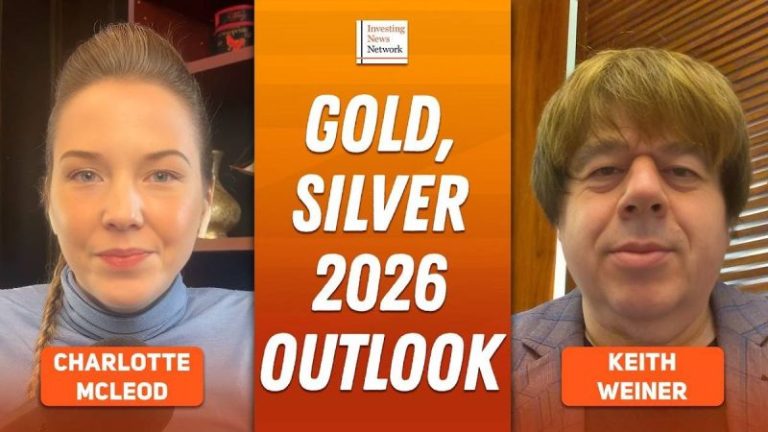
Keith Weiner, founder and CEO of Monetary Metals, shares his outlook for gold and silver in 2026, saying that while he expects higher prices there will be volatility.

He also outlines his thoughts on the role of precious metals in the monetary system.

Securities Disclosure: I, Charlotte McLeod, hold no direct investment interest in any company mentioned in this article.

This post appeared first on investingnews.com

Rio Tinto (ASX:RIO,NYSE:RIO,LSE:RIO) and Glencore (LSE:GLEN,OTCPL:GLCNF) said they will no longer be pursuing a merger, with Rio Tinto noting that the combination of the businesses would not deliver value to its shareholders.

Glencore responded to Rio Tinto by saying that under the terms of the proposal, the Rio Tinto executive group would retain both the chair and CEO roles, which would undervalue Glencore’s contribution to the combined company.

The deal would have created the world’s largest mining company with a combined market cap of US$260 billion. While the collapse of the proposed merger is drawing headlines, it comes at an accelerated pace for mergers and acquisitions in the industry, as majors seek to replenish their project pipelines and mid-cap producers look to grow their businesses.

Among other notable mergers still on the books is Anglo American’s (LSE:AAL,OTCQX:NGLOY) merger with Canada-based Teck Resources (TSX:TECK.A,TECK.B,NYSE:TECK). That deal is currently working its way through regulatory approvals, with the most recent update that it is heading toward antitrust clearance in Europe.

On Wednesday (February 11), Indonesia’s resources ministry ordered Eramet (EPA:ERA,OTCPL:ERMAF) and its joint venture partners, Tsingshan Holding Group, to slash production at the world’s largest nickel mine.

Under the new work and budget plan, PT Weda Bay Nickel has been granted an initial quota of 12 million metric tons, down from the 42 million metric tons it was allowed in 2025.

Nickel has been elevated this year, trading as high as US$18,725 on February 2. Although prices have fallen since that high, the announcement gave nickel some momentum, pushing prices to US$17,720 per metric ton on the London Metal Exchange on Wednesday. Prices eased again on Thursday (February 12), but remain well above 2025 averages.

For more on what’s moving markets this week, check out our top market news round-up.

Markets and commodities react

Canadian equity markets were mixed this week.

The S&P/TSX Composite Index (INDEXTSI:OSPTX) gained 2.88 percent over the week to close Friday (February 13) at 33,073.71, while the S&P/TSX Venture Composite Index (INDEXTSI:JX) shed 0.48 percent to 991.99.

The CSE Composite Index (CSE:CSECOMP) dropped 2.7 percent to 163.24

The gold price was largely flat, losing just 0.07 percent to close at US$5,032.68 per ounce on Friday at 4:00 p.m. EST. The silver price fared worse, closing the week down 8.43 percent at US$76.92 on Friday.

In base metals, the Comex copper price recorded a 2.35 percent decrease this week to US$5.83.

The S&P Goldman Sachs Commodities Index (INDEXSP:SPGSCI) was down 0.13 percent to end Friday at 583.86.

Top Canadian mining stocks this week

How did mining stocks perform against this backdrop?

Take a look at this week’s five best-performing Canadian mining stocks below.

Stocks data for this article was retrieved at 4:00 p.m. EST on Friday using TradingView’s stock screener. Only companies trading on the TSX, TSXV and CSE with market caps greater than C$10 million are included. Mineral companies within the non-energy minerals, energy minerals, process industry and producer manufacturing sectors were considered.

1. Trinity One Metals (TSXV:TOM)

Weekly gain: 104.55 percent
Market cap: C$12.83 million
Share price: C$0.45

Trinity One Metals is a silver exploration and development company with a portfolio of mineral projects, including the recently acquired Silver 1 project in Ecuador.

The property consists of the Silver-1 mine concession, which covers an area of 3,108 hectares and lies within the same mineral belt as Lundin Gold’s (TSX:LUG,OTCQX:LUGDF) Fruta Del Norte mine. Past mining at the site occurred between 1989 and 1994 and included 3,600 meters of underground development, along with a historic resource of 200,000 to 700,000 metric tons of ore averaging 400 to 800 grams per metric ton (g/t) silver and 3 g/t gold.

The company announced the closing of the property acquisition on February 4 for a total consideration of US$540,000. In the release, the company said it will work swiftly to confirm the historic resource to modern standards.

The news was followed on Tuesday (February 10), when the company announced a C$3.3 million non-brokered private placement, which was upsized to C$5.3 million on Thursday. The company said it will use proceeds from the placement to advance exploration projects across its portfolio.

2. Cordoba Minerals (TSXV:CDB)

Weekly gain: 74.68 percent
Market cap: C$123.82 million
Share price: C$1.38

Cordoba Minerals is an explorer whose flagship project is Alacran in Colombia. The asset is a 50/50 joint venture with JCHX Mining Management (SHA:603979). The 20,000 hectare property hosts copper, gold and silver mineralization across five deposits: Alacran, Alacran North, Montiel East, Montiel West and Costa Azul.

A feasibility study for the project released in February 2024 demonstrates an after-tax net present value of US$360 million with an internal rate of return of 23.8 percent and a payback period of three years.

The resource estimate for the Alacran deposit and historical tailings shows an indicated resource of 99.46 million metric tons of ore with an average grade of 0.41 percent copper, 0.24 g/t gold and 2.65 g/t silver. Contained metal totals 904.53 million pounds of copper, 765,400 ounces of gold and 8.47 million ounces of silver.

Following the completion of JCHX’s earn in for 50 percent of the project in July 2025, Cordoba said it had entered into a definitive agreement to sell its remaining 50 percent interest in Alacran.

However, on January 2, the company reported that not all conditions for the sale had been met, and on Tuesday, announced that it had entered into an amended agreement.

Under the new terms, the closing payment was increased to US$128 million from US$88 million, payable in a lump sum at closing. The release states that the bulk of the cash payment will be distributed to shareholders after settling liabilities and obligations, with the company retaining US$10 million for corporate purposes.

3. Rio Silver (TSXV:RYO)

Weekly gain: 52.38 percent
Market cap: C$23.74 million
Share price: C$0.64

Rio Silver is an exploration company advancing its Maria Norte project in Peru.

The property has changed hands several times in the 18 years prior to Rio’s acquisition in March 2025, but has seen little exploration during that time. However, in a February 5 release, the company notes that historic mining occurred at the site due to the presence of a reclaimed waste dump. The property covers the western portion of the Tangana West vein system, and although it has not yet completed an economic assessment for the property. In the announcement, the company said it plans to advance surface mapping and sampling in the third quarter of 2026.

Throughout January, the company made several announcements regarding its exploration and development timeline. On January 6, the company reported results from technical work at the site, confirming the presence of silver mineralization with grades up to 991 g/t in a 0.7-meter channel sample.

The company also announced on January 29 that it was launching a metallurgical program at the site, which it said will assist the company in determining the project’s potential value.

4. Barksdale Resources (TSXV:BRO)

Weekly gain: 48.15 percent
Market cap: C$28.04 million
Share price: C$0.2

Barksdale Resources is a copper explorer focused on advancing its Sunnyside asset in Arizona, US. The property covers approximately 21 square kilometers, south of Tucson, Arizona. It hosts an intrusive complex that the firm believes to be an extension of the copper-zinc-lead-silver system found at South32’s (ASX:S32,OTCPL:SOUHY) Taylor deposit.

In 2025, the company achieved several milestones under its earn-in agreement and completed the initial 51 percent in September following a C$1 million cash payment. Prior to the payment in June, Barksdale said it would work toward increasing its interest in the property to 67.5 percent.

On January 21, the company announced plans to raise C$5 million to fund a Phase 2 drill plan required to increase its ownership stake in the Sunnyside project.

On Wednesday, Barksdale announced the opening of an additional private placement to raise C$930,000. Funds raised from this round will also be used to fund exploration activities at Sunnyside.

5. Pirate Gold (TSXV:YARR)

Weekly gain: 48 percent
Market cap: C$129.48 million
Share price: C$0.37

Formerly Sokoman Minerals, Pirate Gold is a discovery-oriented company with a portfolio of gold projects and one of the largest land positions in Newfoundland and Labrador, Canada.

It also owns a 40 percent stake in the Killick lithium project, a 40/40/20 joint venture with Benton Resources (TSXV:BEX,OTCPL:BNTRF) and Piedmont Lithium.

In October, the company combined its Moosehead and Crippleback claims to form the Treasure Island project, which hosts the largest mineral license and longest strike length along the Valentine Lake fault.

Along with new claims, Pirate Gold’s land holdings in the area cover approximately 58,775 hectares and host multiple untested anomalies identified through historic data and exploration efforts by Pirate Gold.

On Friday, Pirate Gold announced the initiation of project-scale surveys at Treasure Island, as well as the advancement of a 50,000 meter drill program, with two rigs mobilized to the site.

Additionally, the company also said it had received drill permits to operate at the Crippleback Lake and Stony Lake areas, which would allow it to extend its exploration beyond the current footprint at Moosehead and test other high-priority targets along the fault zone.

FAQs for Canadian mining stocks

What is the difference between the TSX and TSXV?

The TSX, or Toronto Stock Exchange, is used by senior companies with larger market caps, and the TSXV, or TSX Venture Exchange, is used by smaller-cap companies. Companies listed on the TSXV can graduate to the senior exchange.

How many mining companies are listed on the TSX and TSXV?

As of December 2025, 898 mining companies and 71 oil and gas companies are listed on the TSXV, combining for more than 60 percent of the 1,531 total companies listed on the exchange.

As for the TSX, it is home to 175 mining companies and 51 oil and gas companies. The exchange has 2,089 companies listed on it in total.

Together, the TSX and TSXV host around 40 percent of the world’s public mining companies.

How much does it cost to list on the TSXV?

There are a variety of different fees that companies must pay to list on the TSXV, and according to the exchange, they can vary based on the transaction’s nature and complexity. The listing fee alone will most likely cost between C$10,000 to C$70,000. Accounting and auditing fees could rack up between C$25,000 and C$100,000, while legal fees are expected to be over C$75,000 and an underwriters’ commission may hit up to 12 percent.

The exchange lists a handful of other fees and expenses companies can expect, including but not limited to security commission and transfer agency fees, investor relations costs and director and officer liability insurance.

These are all just for the initial listing, of course. There are ongoing expenses once companies are trading, such as sustaining fees and additional listing fees, plus the costs associated with filing regular reports.

How do you trade on the TSXV?

Investors can trade on the TSXV the way they would trade stocks on any exchange. This means they can use a stock broker or an individual investment account to buy and sell shares of TSXV-listed companies during the exchange’s trading hours.

Article by Dean Belder; FAQs by Lauren Kelly.

Securities Disclosure: I, Dean Belder, hold no direct investment interest in any company mentioned in this article.

Securities Disclosure: I, Lauren Kelly, hold no direct investment interest in any company mentioned in this article.

This post appeared first on investingnews.com

We also break down next week’s catalysts to watch to help you prepare for the week ahead.

In this article:

    This week’s tech sector performance

    The Nasdaq Composite (INDEXNASDAQ:.IXIC) ended in the green on Monday (February 9) despite a weaker open.

    A rally in tech companies drove US stocks higher ahead of an economic data release, while Asian indexes also rose, led upward by Japan’s tech‑heavy Nikkei 225 (INDEXNIKKEI:NI225).

    It hit new record highs after Prime Minister Sanae Takaichi’s Liberal Democratic Party secured a landslide victory in the Lower House, clearing the path for tax cuts and higher defense spending.

    Tax planning and wealth management stocks fell on Tuesday (February 10) after financial software provider Altruist unveiled an artificial intelligence (AI) tool for creating tax strategies, echoing last week’s selloff in legal software stocks following the debut of a lawyer-focused AI platform.

    Broader tech‑driven weakness and softer‑than‑expected retail‑sales data dragged the Nasdaq down in Tuesday’s session. The index rose again on Wednesday (February 11) after January data showed labor market stability, potentially allowing the US Federal Reserve to keep interest rates steady as it monitors inflation.

    Software stocks resumed their slide, with Alphabet (NASDAQ:GOOGL) at one point down more than 2 percent, Microsoft (NASDAQ:MSFT) falling over 2.5 percent and Amazon (NASDAQ:AMZN) slipping about 1 percent.

    Personal computer makers also fell after Lenovo Group (HKEX:0992,OTCPL:LNVGF) warned of shipment pressure from a memory chip shortage. HP (NYSE:HPQ) and Dell Technologies (NYSE:DELL) each lost about 4.5 percent.

    After a muted close, investors turned their AI disruption fears to yet another corner of the market on Thursday (February 12). This time, it was logistics and trucking stocks, which plummeted after AI logistics firm Algorhythm Holdings (NASDAQ:RIME) said it has scaled freight volumes by 300 to 400 percent without increasing headcount.

    This event showed traders that AI is now affecting sectors previously thought to be resistant to automation and AI‑driven efficiency gains, leading to selloffs that also spilled into real estate and drug distribution.

    All three major indexes closed lower, with the Nasdaq hit hardest.

    A softer-than-expected US consumer price index report released on Friday (February 13) morning reinforced beliefs that the Fed is likely to cut interest rates this year, while global concerns about potential AI-driven disruptions kept investors cautious. European and Asian indexes lost ground, tracking Wall Street’s losses.

    While the S&P 500 (INDEXSP:.INX) closed slightly ahead on the day, mega-cap tech stocks dragged on the Nasdaq, which closed the week 1.77 percent below Monday’s open.

    3 tech stocks moving markets this week

    1.Cloudflare (NYSE:NET)

    Cybersecurity firm Cloudflare saw its share price surge after its sales guidance for the current quarter exceeded expectations. Shares closed 13.07 percent higher for the week.

    2. Applied Materials (NASDAQ:AMAT)

    Applied Materials, a provider of materials engineering solutions for the semiconductor sector, saw its share price rise sharply after reporting better-than-forecast quarterly financial results. Shares advanced 10.05 percent.

    3. Taiwan Semiconductor Manufacturing Company (NYSE:TSM)

    Taiwan Semiconductor Manufacturing Company rose after D.A. Davidson analyst Gil Luria gave it a ‘buy’ rating with a US$450 price target and called it a top AI foundry name. Shares advanced 5.02 percent.

    Cloudflare, TSMC and Applied Materials performance, February 9 to 13, 2026.

    Chart via Google Finance.

    Top tech news of the week

        • Alphabet completed two bond sales this week, raising a combined total of nearly US$52 billion. On Monday, the company sold US$20 billion in US dollars, followed by a nearly US$32 billion multi‑currency bond sale in British pounds and Swiss francs completed within 24 hours on Tuesday.

                                    Tech ETF performance

                                    Tech exchange-traded funds (ETFs) track baskets of major tech stocks, meaning their performance helps investors gauge the overall performance of the niches they cover.

                                    This week, the iShares Semiconductor ETF (NASDAQ:SOXX) advanced by 2.56 percent, while the Invesco PHLX Semiconductor ETF (NASDAQ:SOXQ) advanced by 1.89 percent.

                                    The VanEck Semiconductor ETF (NASDAQ:SMH) also increased by 2.19 percent.

                                    Tech news to watch next week

                                    Tech stocks face a quieter earnings backdrop next week, with no mega‑cap AI giants reporting; instead, the sector will be trading on macro cues and any guidance hints from mid‑tier semis and software names.

                                    Key US data includes jobs‑related releases and consumer confidence surveys.

                                    Securities Disclosure: I, Meagen Seatter, hold no direct investment interest in any company mentioned in this article.

                                    This post appeared first on investingnews.com
                                    CHICAGO — Cardi B was part of Bad Bunny’s Super Bowl halftime show. What she did exactly, well, that turned into a perplexing question for two major prediction markets.

                                    At least one Kalshi trader filed a complaint with the Commodity Futures Trading Commission over how the prediction market handled Sunday’s appearance by the Grammy-winning rapper. The result of a similar event contract on Polymarket also drew the ire of some users on that platform.

                                    Prediction markets provide an opportunity to trade — or wager — on the result of future events. The markets are comprised of typically yes-or-no questions called event contracts, with the prices connected to what traders are willing to pay, which theoretically indicates the perceived probability of an event occurring.

                                    The buy-in for each contract ranges from $0 to $1 each, reflecting a 0% to 100% chance of what traders think could happen.

                                    More than $47.3 million was wagered on Kalshi’s market for “ Who will perform at the Big Game? ” A Polymarket contract had more than $10 million in volume.

                                    Celebrities including Pedro Pascal, Karol G and Cardi B during the Super Bowl halftime show on Sunday.Kevin Mazur / Getty Images for Roc Nation

                                    Cardi B joined singers Karol G and Young Miko and actors Jessica Alba and Pedro Pascal on a starry front porch during the halftime spectacle. She danced to the music, but it was unclear whether she was singing along during the show, which included performances by Ricky Martin and Lady Gaga.

                                    Due to “ambiguity over whether or not Cardi B’s attendance at the 2026 Super Bowl halftime show constituted a qualifying ‘performance,’” Kalshi cited one of its rules in settling the market at the last price before trading was paused: $0.74 for No holders and $0.26 for Yes holders. The platform returned all the money to its users.

                                    Polymarket’s contract was resolved as Cardi B had performed, but the yes was disputed. A final decision on the contract is expected to be announced on Wednesday.

                                    In the CFTC complaint — first reported by the Event Horizon newsletter and posted by Front Office Sports — the trader alleges that Kalshi violated the Commodity Exchange Act with how it resolved the Cardi B contract. The trader — a Yes holder — is seeking $3,700.

                                    A CFTC spokesman declined comment on Wednesday.

                                    The Super Bowl capped a big NFL season for prediction markets.

                                    Kalshi reported a daily record high of more than $1 billion in total trading volume on the day of the game, an increase of more than 2,700% compared to last year’s Super Bowl. The season-long total for all Super Bowl winner futures was $828.6 million, up more than 2,000% from last year.

                                    The increased activity on Sunday caused some deposit issues. Kalshi co-founder Luana Lopes Lara posted on X on Monday that the “traffic spike was way bigger than our most optimistic forecasts.” She said the platform had reimbursed processing fees on the effected deposits and added credits to users who experienced delays.

                                    Robinhood Markets highlighted the strength of its prediction markets when it announced its financial results for the fourth quarter and full 2025 on Tuesday.

                                    “I think we are just at the beginning of a prediction market super cycle that could drive trillions in annual volume over time,” CEO Vlad Tenev said during an earnings call. “This year is going to be a big year. Olympics are going on right now. World Cup coming in the summer.”

                                    This post appeared first on NBC NEWS

                                    Bahia Metals Corp. (CSE: BMT) (‘Bahia‘ or the ‘Company‘) is pleased to announce that it has successfully completed its initial public offering (the ‘IPO‘) of 11,500,000 units of the Company (the ‘Units‘) at a price of $0.50 per Unit, inclusive of the full exercise of the 15% over-allotment option. The gross proceeds from the IPO financing were $5,750,000.

                                    The Company’s common shares will commence trading on February 12, 2026 on the Canadian Securities Exchange (‘CSE‘) under the ticker symbol ‘BMT.CN’.

                                    Each Unit of the IPO financing consists of one common share in the authorized share structure of the Company and one-half of one common share purchase warrant. Each whole warrant entitles the holder thereof to purchase one common share in the capital of the Company at a price of $0.90 per share until February 11, 2029. The warrants are subject to an acceleration right held by the Company, such that in the event that the closing price of the Company’s shares on the CSE is $1.50 or greater per share for a total of seven trading days within a twenty consecutive day trading period, all warrants issued in connection with the IPO will expire 30 days following written notice (via news release) provided by the Company (the ‘Acceleration‘).

                                    Pursuant to an agency agreement dated January 30, 2026, between Canaccord Genuity Corp. (the ‘Agent‘) and the Company, the Agent acted as exclusive agent for the Company in connection with the IPO. The Company paid cash commission in the amount of $347,958, issued 100,000 common shares of the Company, and granted non-transferable warrants to purchase up to an aggregate of 795,916 common shares of the Company at a price of $0.50 per share until February 11, 2029, subject to the Acceleration and a voluntary six-month hold period.

                                    The net proceeds from the IPO will be expended on work programs at the Company’s Mangueiros Nickel Sulphide-Copper Cobalt Project located in Bahia State, Brazil and for general working capital purposes.

                                    Mr. Goodman, CEO, states, ‘Bahia Metals has completed the requirements to secure 100% of the project that was initially owned and advanced by investors related to Appian Capital Advisory Limited. This milestone is a positive step in the company’s trajectory towards increasing shareholder value.’

                                    The company will be attending PDAC 2026 from March 1-4 and looks forward to meeting with its supporters and the broader mining community. Please email the company to arrange a meeting.

                                    About Bahia Metals Corp.

                                    Bahia Metals Corp. is a mining company focused on advancing its Mangueiros Project, a Nickel Sulphide – Copper Cobalt project located in Bahia State, Brazil.

                                    On behalf of the Board of Directors:

                                    Stephen Goodman
                                    Chief Executive Officer, Director
                                    E: Investors@bahiametals.com
                                    Follow us on LinkedIn

                                    The Canadian Securities Exchange has not reviewed this press release and does not accept responsibility for the adequacy or accuracy of this news release.

                                    Forward-looking Statements

                                    This press release contains certain forward-looking statements as well as historical information. Readers should not rely on information in this summary for any purpose other than for gaining general knowledge of the Company. Forward-looking statements include, but are not limited to, the trading of the Company’s common shares on the CSE and the timing thereof and the Company attending PDAC. The words ‘expected’, ‘will’, ‘will have’, ‘will be’, ‘estimated’ and similar expressions are intended to be among the statements that identify forward-looking statements. Although the Company believes that its expectations as reflected in any forward-looking statements are reasonable, such statements involve risks and uncertainties and no assurance can be given that actual results will be consistent with these forward-looking statements. Except as required by law, the Company undertakes no obligation to update these forward-looking statements in the event that management’s beliefs, estimates, opinions or other factors should change.

                                    The securities referenced in this news release have not been and will not be registered under the United States Securities Act of 1933, as amended (the ‘U.S. Securities Act‘), or any applicable state securities laws and may not be offered or sold in the United States or to ‘U.S. persons’ (as such term is defined in Regulation S under the U.S. Securities Act) absent such registration or an applicable exemption from such registration requirements. This news release shall not constitute an offer to sell or the solicitation of an offer to buy such securities in any jurisdiction.

                                    Source

                                    This post appeared first on investingnews.com

                                    New Frontier Minerals Ltd (LSE and ASX: NFM) is pleased to announce that it has entered into a binding option and earn-in agreement providing NFM with the right to acquire a majority (90%) interest in the Pomme REE Project from Australian-listed company Metallium (ASX: MTM), which is located approximately 500 km northwest of Montréal in Québec around 100 km from the service town of Lebel-sur-Quévillon. The Pomme Project consists of 43 mineral claims, covering 2,400 ha. NFM holds the exclusive and binding option to acquire 90% of the Pomme REE-Nb project.

                                    Highlights

                                    • Binding option and staged earn-in agreement executed to acquire 90% of the Pomme Project, which is a large carbonatite-hosted Rare Earth Element (REE) and Niobium (Nb) Project in Québec
                                    • Strategic alignment and acquisition from Metallium Limited (ASX: MTM) deepens the Harts Range vertical integration1 and adds a complementary Canadian asset to create a western world jurisdictional partnership
                                    • Metallium to assist as processing and technology partner, supporting metallurgical test work and downstream development
                                    • Initial activities will target conventional metallurgical studies work and Flash Joule Heating (FJH) test work on existing drill samples to assess the potential for upgrading REE mineralisation
                                    • Limited wide spaced scout drilling undertaken to date with high grade known mineralisation and large areas remaining untested from reconnaissance drilling
                                    • Pomme REE Carbonatite key historical intercepts2,8 include:
                                      • Drillhole POM-23-03: 398m @ 0.54% TREO & 0.05% Nb2O5 from 16m, including:
                                        • 30.5m @ 1.13% TREO & 0.03% Nb2O5 (from 311.5m) including
                                          • 26.5m @ 1.45% TREO & 0.02% Nb2O5
                                        • 51m @ 0.92% TREO & 0.06% Nb2O5 (from 216m) including
                                          • 9m @ 1.21% TREO & 0.03% Nb2O5 and
                                          • 8.5m @ 1.62% TREO & 0.03% Nb2O5
                                        • 36m @ 0.92% TREO & 0.06% Nb2O5 (from 174m) including
                                          • 18m @ 1.16% TREO & 0.03% Nb2O5
                                      • Drillhole POM-23-01: 513m @ 0.33% TREO & 0.08% Nb2O5 from 32m, including:
                                        • 17.5m @ 0.68% TREO & 0.08% Nb2O5 (from 228.6m) including
                                          • 7.6m @ 0.9% TREO & 0.02% Nb2O5, and
                                      • 94.8m @ 0.55% TREO & 0.05% Nb2O5 (from 333.5m) including
                                        • 4.5m @ 1% TREO & 0.02% Nb2O5, and
                                        • 4.9m @ 1.1% TREO & 0.02% Nb2O5, and
                                        • 4.25m @ 1.28% TREO & 0.02% Nb2O5, and
                                        • 17m @ 0.72% TREO & 0.06% Nb2O5
                                    • The project comprises easily accessible claims via logging roads, has access to hydro-electric power, relatively flat topography, and is supported by extensive mining infrastructure and services2
                                    • Low cost upfront consideration A$100,000 cash and A$200,000 in shares with contingent payments to earn a majority project interest through staged investment and technical milestones
                                    • Government support and existing arrangements with local Cree First Nations of Waswanipi (CFNW) community2
                                    • NFM (OTCQB:NFMXF) has engaged New York-based Viriathus Investor Advisory to expand its profile and actively promote the Company to US investors and capital markets

                                    Chairman Gerrard Hall commented: ‘This transaction materially advances NFM’s critical minerals strategy. Pomme is a large, carbonatite-hosted REE system in a proven Québec district, with historical drilling having already confirmed scale and continuity. The earn-in structure provides a capital-efficient pathway for growth, while early integration of Metallium as processing and technology partner further enhances the opportunity. The Board believes Pomme’s scale, location and upside strongly position NFM to deliver meaningful shareholder value.’

                                    John Hannaford, Chairman of Metallium, said: ‘We are delighted to partner with NFM in advancing and unlocking the full potential of the Pomme rare earths project. New Frontier brings strong exploration capability and a disciplined, value-driven approach to discovery, which we believe can materially enhance the scale and quality of the mineralised system. When combined with Metallium’s proprietary processing technologies and a comprehensive metallurgical test-work program, this partnership has the potential to support value uplift across both the resource and downstream development pathways.’

                                    POMME CARBONATITE REE PROJECT

                                    The Project is located approximately 500 km northwest of Montréal in Québec, around 100 km from the service town of Lebel-sur-Quévillon, approximately 50 km west of the Waswanipi Cree First Nation community, and benefits from easy access via established logging roads (Figure 1)2. The Project comprises 43 mineral claims, covering approximately 2,400 ha area and is located 7km from the world class Montviel Deposit, which has a total Indicated and Inferred resource of 266 Mt @ 1.46% TREO and 0.14% Nb2O5.

                                    Figure 1: Regional location map showing Pomme Project, in Québec, Canada2

                                    MTM Critical Metals (a 100% subsidiary of ASX:MTM) has completed a 13-hole diamond drilling program totalling approximately 5,718 metres at its Pomme Rare Earth Element and Niobium Project in Québec, Canada2. Carbonatite-hosted REE-Nb mineralisation was intersected in every drill hole, confirming the presence of a large, laterally extensive mineralised system exceeding 2 km² that remains open at depth (Figure 2).

                                    The historic work program has significantly advanced the geological understanding of the complex, with early interpretations indicating that higher-grade mineralisation occurs within a ring structure surrounding a magnetic ultramafic carbonatite core.

                                    Drill holes POM-23-03, POM 23-01 and POM 23-07 to the southwest of the mineralised carbonatite returned broad mineralised intervals with multiple high-grade TREO intersections, supporting strong geological similarities to the nearby world-class Montviel carbonatite deposit.

                                    Importantly, large portions of this prospective ring structure remain untested due to the broad drill spacing, presenting clear potential for further discovery through follow-up drilling.

                                    Figure 2: MTM scout drilling at the Pomme Project area overlain on airborne magnetic image (TMI, 1VD)

                                    STRATEGY AND DEVELOPMENT OPPORTUNITY

                                    The Pomme Project provides NFM with a highly capital-efficient, low-risk entry into a strategically located Canadian rare earth asset via a two-year option structure requiring upfront consideration of A$100,000 in cash and A$200,000 in NFM shares and minimum annual expenditure of A$100,000 per annum during the option period. This staged earn-in framework enables NFM to progressively earn a majority (90%) interest through defined technical and investment milestones, significantly limiting upfront capital exposure while preserving substantial upside.

                                    1. Initial work programs will focus on conventional metallurgical test work alongside the application of Metallium’s proprietary Flash Joule Heating (FJH) technology to existing drill core, targeting the production of upgraded rare earth concentrates and early validation of a scalable, low-cost processing pathway that has the potential to materially enhance project economics.
                                    2. The Pomme Project presents compelling exploration upside, having been subject to only limited, widely spaced drilling to date, with drill lines approximately 500 metres apart2. Despite this early-stage drill density, high-grade rare earth element intersections have already been identified within a large, laterally extensive carbonatite system, highlighting the potential for significant growth through follow-up drilling targeting near surface higher grade zones of rare earth mineralistion.

                                    The existing results indicate that higher-grade zones of mineralisation remain open, providing New Frontier Minerals with a strong opportunity to materially expand the scale and grade of mineralisation through systematic infill and step-out drilling programs.

                                    METALLIUM TECHNOLOGY PARTNERSHIP

                                    The acquisition deepens the Harts Range vertical integration with MTM1, adds a highly complementary Canadian asset, and creates a compelling Western-world partnership with MTM across Australia and Canada, delivering value for shareholders.

                                    NFM’s binding commercial framework with Metallium also establishes a strategic technology partnership that is directly applicable to the advancement of the Pomme REE-Nb Project in Québec. Under this framework, MTM’s proprietary Flash Joule Heating (FJH) technology has demonstrated encouraging sighter beneficiation results on raw rare earth ore, producing high-grade, Dy/Tb-rich concentrates without conventional flotation, acid leaching or reagent-intensive processing.

                                    The REE concentration enhancement and impurity rejection results observed through the aforementioned FJH test work indicate potential to support alternative downstream processing pathways for carbonatite-hosted rare earth projects such as Pomme, compared to conventional techniques. Alignment with MTM provides NFM with early integration of advanced metallurgical test work, access to MTM’s Texas Technology Campus for testing, and a clear potential pathway to Western-aligned rare earth supply chains, including U.S. magnet and defence markets, reinforcing the strategic value of the Pomme Project within a vertically integrated rare earth development strategy.

                                    NEXT STEPS

                                    Preliminary metallurgical test work

                                    Selection of diamond drill core for characterisation tests and accelerate metallurgical assessment on existing diamond core samples, utilising conventional metallurgical test work and tailored MTM Flash Joule Heating (FJH) processing technology to beneficiate and upgrade REE sample.

                                    Model geology, drilling and target high-grade mineralisation

                                    Integration of geological logging, assay results and geophysics into 3D model and identification of continuous higher grade zones for follow-up drilling.

                                    OPTION AND EARN-IN TERMS

                                    The Pomme Project consists of 43 mineral claims, covering 2,400 ha. New Frontier Minerals holds the exclusive and binding option to acquire 90% of the Pomme REE-Nb project from Metallium.

                                    Key Terms Summary – Pomme Rare Earth Project Option & Earn up to 90% interest in the project tenements from Metallium Ltd (via its option to acquire 100% of Critical Element Exploration Pty Ltd, holder of the GeoMega option).

                                    Option Terms and Earn-in Terms

                                    Option Fee:

                                    • A$100,000 cash (A$50,000 already paid as an exclusivity deposit)
                                    • A$200,000 in NFM shares, (issued at 5-day VWAP, 6-months escrow)
                                    • Option Period: Commences on access to historic drill samples for 24-month duration with exclusive rights to manage exploration and technical work during the option period

                                    Stage 1 – Option Exercise (Initial Earn-In)

                                    Upon exercise of the option at any time during the Option Period (subject to conditions precedent), NFM must pay the following option exercise fee:

                                    • Cash: A$150,000
                                    • Equity: A$200,000 in NFM shares (20-day VWAP, 6-month escrow)Result: Entry into Joint Venture and commencement of staged earn-in
                                    • Minimum annual expenditure of A$100,000 per annum

                                    Exercise of the Option is conditional upon the satisfaction (or waiver as applicable) of the following conditions precedent:

                                    • Due diligence: completion of financial, legal and technical due diligence on the Tenements, to the absolute satisfaction of NFM;
                                    • Third party approvals: the Parties obtaining all third party approvals and consents, necessary to lawfully complete the matters set out in this Agreement;
                                    • Deeds of assignment and assumption: MTM, NFM executing a deed of assignment and assumption in relation to all material agreements;
                                    • Joint Venture Agreement: the Parties entering into a definitive Joint Venture Agreement consistent with the terms and conditions set out in the binding Agreement;
                                    • MTM and/ or its subsidiaries being the 100% legal and beneficial owner of the Tenements; and
                                    • Technology Licence Agreement: MTM and NFM entering into a definitive Technology Licence Agreement consistent with the terms and conditions set out in the binding Agreement;
                                    • (together, the Conditions Precedent).

                                    Stage 2 – JORC Resource Milestone (within 3 years)

                                    • Minimum Spend: A$2.0 million
                                    • Interest Earned: 80% project interest
                                    • Milestone Payment: A$250,000 cash and A$250,000 in NFM shares (20-day VWAP, 6-month escrow) upon earning an 80% interest

                                    Stage 3 – Pre-Feasibility Study Milestone (within 5 years)

                                    • Minimum Spend: A$3.0 million
                                    • Interest Earned: 90% project interest
                                    • Milestone Payment: A$250,000 cash and A$250,000 in NFM shares (20-day VWAP, 6-month escrow) upon earning a 90% interest

                                    Residual Interest & FJH Royalty

                                    • Vendor retains 10% free-carried interest to DFS
                                    • If diluted below 10%, interest converts to a 1.5% NSR royalty on material processed through Metallium’s FJH facility
                                    • Existing third-party royalties (GeoMega/Niogold) remain in place

                                    Technology Alignment

                                    • Metallium retains ownership of its Flash Joule Heating (FJH) processing technology
                                    • Parties may enter into a separate technology licence agreement, including per-tonne fees, annual licence fees, and royalties (commercial terms to be negotiated)

                                    About New Frontier Minerals

                                    New Frontier Minerals Limited is an Australian-based focussed explorer, with a strategy to develop multi-commodity assets that demonstrate future potential as an economic mining operation. Through the application of disciplined and structured exploration, New Frontier has identified assets deemed core and is actively progressing these interests up the value curve. Current focus will be on advancing exploration activity at the Harts Range Niobium, Uranium and Heavy Rare Earths Project which is circa 140km north-east from Alice Springs in the Northern Territory.

                                    Other interests include the NWQ Copper Project, situated in the copper-belt district circa 150km north of Mt Isa in Queensland.

                                    New Frontier Minerals is listed on the LSE and ASX under the ticker ‘NFM’.

                                    Competent Persons Statement

                                    The scientific and technical information in this announcement, which relates to exploration results, preliminary sequential metallurgical results and the geology of the deposits described, is based on information compiled and approved for release by Mark Biggs. Mark Biggs is a Member of The Australasian Institute of Mining and Metallurgy (AusIMM Member # 107188) and meets the requirements of a Competent Person as defined by the 2012 Edition of the Australasian Code for Reporting of Exploration Results, Mineral Resources and Ore Reserves (JORC Code 2012 Edition). Mark Biggs has 35 years of experience relevant to Rare Earth Elements (REE), industrial mineral copper mineralisation types, as well as expertise in the quality and potential mining methods of the deposits under consideration. Additionally, he has 25 years of experience in the estimation, assessment, and evaluation of exploration results and mineral resource estimates, which are the activities for which he accepts responsibility. He also successfully completed an AusIMM Online Course Certificate in 2012 JORC Code Reporting. Mark Biggs is a consultant with ROM Resources and was engaged by New Frontier Minerals Limited to prepare the documentation for several prospects, specifically those within the Harts Range Prospects upon which the Report is based.

                                    Furthermore, the full nature of the relationship between himself and New Frontier Minerals Limited has been disclosed, including any potential conflicts of interest. Mark Biggs is a director of ROM Resources, a company that is a shareholder of New Frontier Minerals Limited, and ROM Resources provides occasional geological consultancy services to New Frontier Minerals Limited. The Report or excerpts referenced in this statement have been reviewed, ensuring that they are based on and accurately reflect, in both form and context, the supporting documentation relating to exploration results and any mineral resource estimates. The release of the Report and this statement has been consented to by the Directors of New Frontier Minerals Limited. Mr Biggs consents to the inclusion in this announcement of the matters based on his information and supporting documents in the form and context in which it appears.

                                    Forward Looking Statements

                                    Certain information in this document refers to the intentions of New Frontier Minerals Ltd, but these are not intended to be forecasts, forward-looking statements, or statements about future matters for the purposes of the Corporations Act or any other applicable law. The occurrence of events in the future is subject to risks, uncertainties and other factors that may cause New Frontier Minerals Ltd’s actual results, performance, or achievements to differ from those referred to in this announcement. Accordingly, New Frontier Minerals Ltd, its directors, officers, employees, and agents, do not give any assurance or guarantee that the occurrence of the events referred to in this announcement will occur as contemplated. The interpretations and conclusions reached in this announcement are based on current geological theory and the best evidence available to the authors at the time of writing. It is the nature of all scientific conclusions that they are founded on an assessment of probabilities and, however high these probabilities might be, they make no claim for complete certainty. Any economic decisions that might be taken based on interpretations or conclusions contained in this announcement will therefore carry an element of risk. The announcement may contain forward-looking statements that involve several risks and uncertainties. These risks include but are not limited to, economic conditions, stock market fluctuations, commodity demand and price movements, access to infrastructure, timing of approvals, regulatory risks, operational risks, reliance on key personnel, Ore Reserve and Mineral Resource estimates, native title, foreign currency fluctuations, exploration risks, mining development, construction, and commissioning risk. These forward-looking statements are expressed in good faith and believed to have a reasonable basis. These statements reflect current expectations, intentions or strategies regarding the future and assumptions based on currently available information. Should one or more of the risks or uncertainties materialise, or should underlying assumptions prove incorrect, actual results may vary from the expectations, intentions and strategies described in this announcement. No obligation is assumed to update forward-looking statements if these beliefs, opinions, and estimates should change or to reflect other future developments.

                                    Source

                                    This post appeared first on investingnews.com